Introduction
Enterprise digital experience is no longer about “building portals.”
In 2026, it is about orchestrating intelligent, connected, and scalable ecosystems that deliver value across customers, employees, and partners. Organizations are moving beyond fragmented systems and embracing Digital Experience Platforms (DXPs) that unify content, data, workflows, and personalization.
The modern enterprise demands more than a content hub or a customer-facing interface. It demands a living platform – one that evolves with the business, integrates with the broader technology stack, and enables teams to move fast without compromising stability or governance.
This is where Liferay DXP is redefining the game. Across industries – from banking and healthcare to manufacturing and government – Liferay is being deployed not just as a portal platform but as the central nervous system of enterprise digital strategy.
Composable Architecture : The End of Monolithic Thinking
Traditional enterprise systems were rigid, slow to evolve, and costly to maintain. They were built on the assumption that a single vendor could solve every business problem – and that assumption has long proven false. In 2026, agility is non-negotiable.
Liferay DXP embraces a composable architecture, allowing organizations to design systems as a collection of independent yet connected services. Instead of rebuilding entire platforms, teams can enhance or replace specific capabilities without disruption.
What Composable Architecture Enables :
Faster time-to-market by isolating changes to individual services or components
Reduced risk during upgrades – changes in one area do not cascade across the platform
Freedom to adopt best-of-breed tools for specific functions while Liferay acts as the experience layer
API-first integration with CRM systems (like Salesforce), ERP platforms (like SAP), and third-party data services
This approach becomes especially powerful when Liferay is positioned as the experience orchestration layer – the glue connecting backend systems, data sources, and front-end experiences through a unified interface.
Enterprises no longer need to choose between flexibility and consistency. Composable architecture delivers both.
AI-Powered Experiences : From Automation to Intelligence
AI in enterprise platforms has evolved well beyond automation. It now plays a critical role in decision-making, content personalization, operational efficiency, and predictive analytics.
Liferay DXP integrates AI capabilities that enhance how experiences are created and delivered – whether through smart content generation, automated tagging, semantic search, or behavioral insights that guide user journeys.
Key AI Capabilities in Enterprise DXPs :
Smart content recommendations based on user behavior, role, and context
Automated metadata tagging and content classification to reduce manual effort
Natural language search that surfaces the right content even with imprecise queries
Behavioral analytics that identify engagement patterns and highlight friction points
AI-assisted workflow creation, reducing the time to build complex business processes
However, the real value lies in how AI is implemented. Enterprises that succeed are not replacing humans – they are augmenting them. AI in this context is not about eliminating teams; it is about freeing them from repetitive, low-value tasks so they can focus on strategy, creativity, and customer outcomes.
The organizations that deploy AI thoughtfully – with clear governance, human oversight, and measurable outcomes – are the ones building sustainable competitive advantages.
Personalization at Scale : Context Over Identity
Personalization has matured significantly. It is no longer about addressing users by their first name in an email. In 2026, true personalization means understanding context, intent, and behavior in real time – and responding accordingly.
Liferay DXP enables organizations to build dynamic experiences by combining user data, behavioral signals, and business rules. The result is a system that adapts continuously – delivering relevant content, services, and user journeys to every individual.
Dimensions of Effective Personalization :
Role-based personalization: Different experiences for customers, partners, and internal employees
Customers see product information, support resources, and self-service options
Partners access deal registration, co-marketing tools, and pipeline dashboards
Employees find HR tools, internal communications, and departmental content
Behavioral personalization: Surfacing content based on past interactions, search history, and time-on-page data
Contextual personalization: Adapting experiences based on device, location, language, and time of day
Segment-based personalization: Targeting distinct audience groups with tailored messaging and content
The real challenge is not technology – it is data alignment. Many organizations have the tools to personalize but lack the data infrastructure or governance to do it at scale. Building a clean, unified data model that feeds the personalization engine is often the most critical investment.
Low-Code Enablement : Speed Without Chaos
In fast-moving enterprises, development bottlenecks can slow down innovation. When every digital initiative requires a backlog entry and a sprint cycle, business agility suffers.
Liferay addresses this through low-code and no-code capabilities, empowering business users to contribute directly to digital initiatives – without waiting on development teams for every change.
What Business Users Can Build with Low-Code Tools :
Custom forms and data collection workflows
Automated approval processes and notifications
Simple applications and internal tools
Page layouts and experience components without writing code
Integrations with external systems through pre-built connectors
But speed without control leads to fragmentation. The most effective low-code implementations are governed – they operate within a framework that ensures consistency, security, and reusability. Liferay provides this balance through centralized templates, permission systems, and design standards that keep low-code output aligned with enterprise standards.
The outcome is a healthier collaboration model: developers focus on complex, high-value engineering, while business users handle iteration, content, and workflow – both moving faster as a result.
Security & Identity : Foundation of Digital Trust
As digital ecosystems expand, so does the attack surface. Security is no longer a feature – it is a foundational requirement. Every integration point, every user session, and every data exchange must be treated as a potential vulnerability.
Liferay DXP integrates seamlessly with enterprise identity systems, including Okta, Azure Active Directory, and other SAML/OAuth-compliant providers, enabling secure authentication and authorization across all platforms and touchpoints.
Security Pillars in Modern Enterprise DXPs :
Single Sign-On (SSO) : One authentication event grants access across all connected systems, reducing password fatigue and attack vectors
Multi-Factor Authentication (MFA) : Adding a second layer of verification for sensitive operations and high-risk access
Role-Based Access Control (RBAC) : Ensuring users only see and interact with what their role permits
Zero Trust Architecture: Every request is verified, regardless of origin – no implicit trust based on network location
Audit logging and compliance reporting: Full visibility into who accessed what, when, and from where
Data encryption in transit and at rest: Protecting sensitive information at every point in its lifecycle
What sets modern implementations apart is the shift toward Zero Trust Architecture – a model where every interaction is continuously verified rather than implicitly trusted. This is especially critical for organizations managing multi-cloud environments, remote workforces, and partner ecosystems with varying security postures.
Cloud-Native & DevSecOps : Engineering for Scale
Enterprise platforms must now operate in dynamic, cloud-native environments. The expectation is no longer quarterly releases and scheduled maintenance windows – it is continuous delivery, automated testing, and real-time monitoring.
Liferay DXP aligns with this need through support for containerization (Docker, Kubernetes), orchestration, and automated deployment pipelines that integrate with CI/CD tools like Jenkins, GitHub Actions, and GitLab CI.
Cloud-Native Capabilities That Drive Operational Excellence :
Containerized deployments : Portable, consistent environments from development to production
Horizontal scaling : Automatically add capacity during peak traffic without manual intervention
Infrastructure as Code (IaC) : Version-controlled environment definitions that eliminate configuration drift
Automated testing pipelines : Catch issues before they reach production, reducing rollback risk
Security embedded in the pipeline (DevSecOps) : Vulnerability scanning, dependency checks, and compliance validation baked into the delivery process
This enables organizations to move from traditional release cycles to continuous delivery models, where updates are faster, safer, and more predictable. The shift is not just technical – it is cultural. Teams that adopt DevSecOps practices report fewer incidents, faster recoveries, and greater confidence in deploying changes.
Unified Experience Layer : One Platform, Multiple Journeys
One of the defining strengths of Liferay DXP is its ability to support multiple distinct experiences – customer portals, employee intranets, partner ecosystems, and dealer networks – on a single, centrally governed platform.
This unified approach reduces duplication, lowers total cost of ownership, and ensures consistency across all digital touchpoints. Instead of building and maintaining separate systems for each audience, enterprises create a shared experience layer with reusable components, common governance, and shared data models.
Experience Types Supported on a Single Liferay Instance :
Customer self-service portals : Account management, order tracking, support tickets, knowledge bases
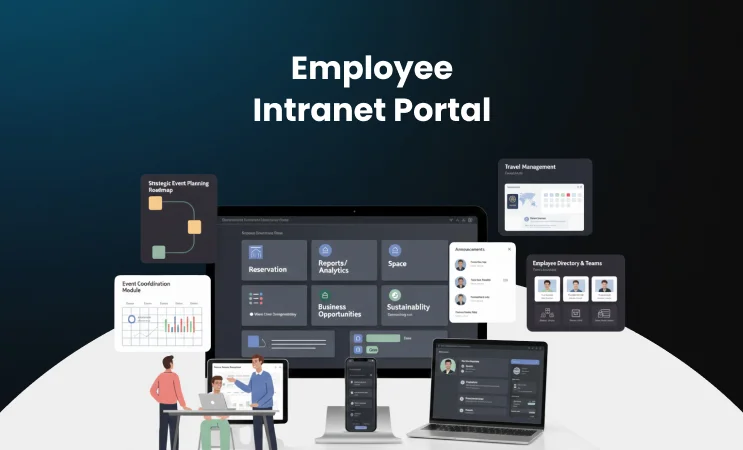
Employee intranets : HR tools, internal communications, policy libraries, and departmental dashboards
Liferay Partner portals : Deal registration, co-marketing assets, certification programs, and pipeline visibility
Dealer and distributor networks : Product catalogs, pricing tools, order management, and training resources
Public-facing websites : Marketing sites, campaign landing pages, and resource centers
The business case for unification is compelling: fewer platforms to maintain, a smaller vendor footprint, consistent security governance, and a single source of truth for content and data. Teams can share components across audiences, reducing duplication and accelerating delivery for every new initiative.
Content as Infrastructure : Beyond Traditional CMS
Content is no longer static – it is dynamic, structured, deeply integrated into digital experiences, and increasingly consumed across multiple channels simultaneously. The idea of “publishing a page” has been replaced by the idea of managing structured content objects that can be assembled, personalized, and delivered in countless combinations.
Liferay DXP transforms content into reusable assets that can be delivered across channels, personalized in real time, and governed through structured workflows – from creation and review to approval and publication.
What Structured Content Modeling Enables :
Write once, publish everywhere : A single piece of content rendered appropriately across web, mobile, email, and API-driven channels
Consistent taxonomy and metadata : Making content discoverable, searchable, and reportable across the platform
Workflow-driven governance : Ensuring content goes through the right review and approval processes before publication
Versioning and rollback : Maintaining a full history of content changes with the ability to restore previous versions
Headless delivery : Exposing content through APIs so it can be consumed by any front-end or third-party system
The shift from page-based content to structured content modeling is critical for scalability. As organizations grow, the volume and complexity of content increases exponentially. Only a structured, governed approach can keep pace – and Liferay DXP provides exactly that foundation.
Conclusion : The Rise of the Digital Experience Backbone
In 2026, enterprises are no longer looking for platforms – they are building digital foundations that support continuous evolution. The question is not “which portal tool should we buy?” but “how do we architect a system that can adapt as our business, customers, and technology landscape change?”
Liferay DXP stands at the center of this transformation, combining flexibility, intelligence, and scalability into a unified solution. It is the platform for organizations that want to move beyond fragmented tools and siloed experiences toward a coherent, governed, and future-ready digital backbone.
Key Takeaways :
- Composable architecture enables agility without chaos – replace and enhance capabilities without platform-wide disruption
- AI augments human performance – freeing teams to focus on high-value work while automation handles the routine
- Personalization at scale requires both the right technology and clean, unified data
- Low-code tools accelerate delivery when governed within a clear framework
- Security must be foundational – Zero Trust and identity integration are non-negotiable
- Cloud-native DevSecOps practices enable continuous, safe delivery at enterprise scale
- A unified experience layer reduces cost, complexity, and fragmentation across all digital audiences
- Structured content modeling is the only scalable approach to managing content across channels and geographies
The organizations that succeed will not be those with the most technology – but those who use it to create meaningful, connected, and adaptive experiences. Liferay DXP gives them the platform to do exactly that.