Introduction
Managing content across multiple channels – apps, portals, websites – has always been a pain point for enterprise teams. Too many tools, disconnected repositories, and marketing teams depending on IT for every small update.
Liferay just addressed this head-on.
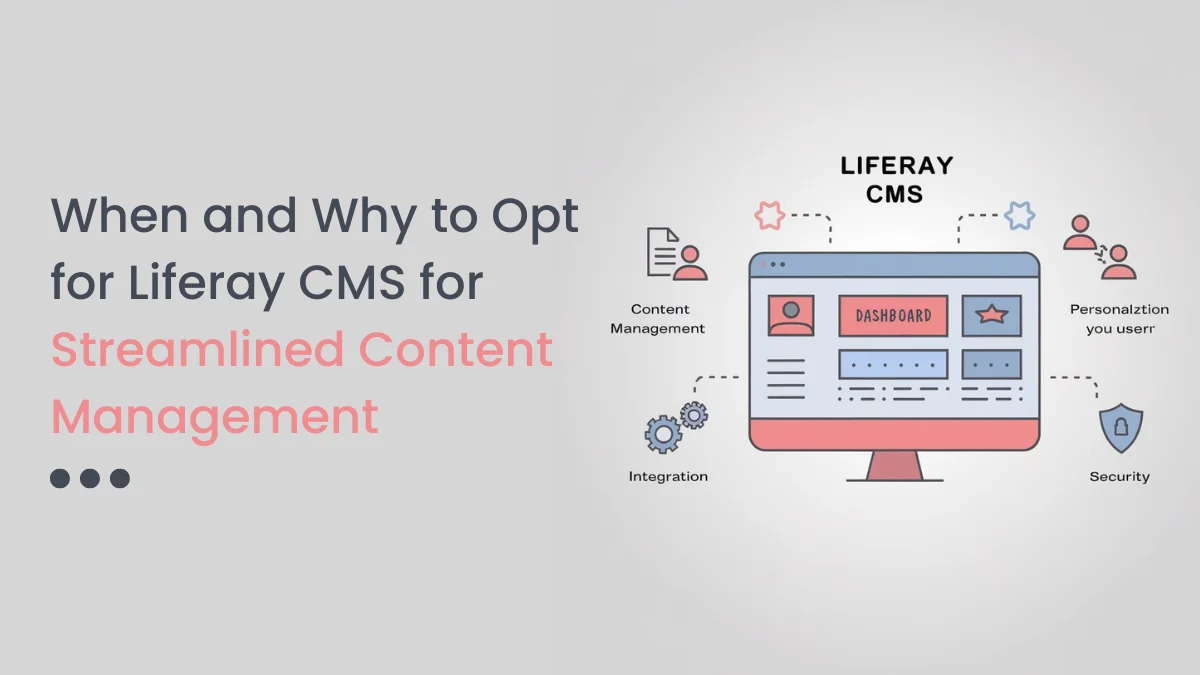
Liferay has announced the general availability of Liferay CMS – a fully headless content management system built on the same core architecture as Liferay DXP. And for enterprises already on Liferay, or evaluating it, this is a significant move worth understanding.
What Is Liferay CMS?
Liferay CMS is a headless-first content platform designed to help marketing, development, and IT teams work together – without stepping on each other’s toes.
It sits on top of Liferay DXP’s proven architecture, which means it inherits all the enterprise-grade stability, security, and governance that Liferay is known for – while giving content teams the freedom of a modern, decoupled system.
In short: the agility of a headless CMS + the control of an enterprise DXP.
The Big Idea : Spaces
The core organizational concept in Liferay CMS is Spaces.
Think of a Space as a dedicated content environment – one per brand, department, region, or project. Each Space includes :
Its own asset repository
Granular access control per team
Built-in localization with AI-powered translation
A dedicated workspace for content creation and review
This makes Liferay CMS particularly powerful for global organizations managing content across multiple brands or languages from a single platform.
Key Features at a Glance
Feature | What It Does |
Global Content Visibility | Search, review, and reuse content across all regions and brands from one view |
Headless Architecture | API-first delivery – push content to any channel, any frontend |
Embedded Analytics | View performance metrics (views, downloads) directly inside the CMS |
AI-Assisted Workflows | Accelerate translation, localization, and content review with AI |
Multi-Site Management | Centralize control while giving each site or franchise its own access |
Unified Collaboration | ‘Shared with Me’ areas and advanced access controls for all stakeholders |
Why This Matters : The Headless Advantage
Traditional CMS platforms tie your content to a specific frontend – change the frontend, migrate your content. That’s expensive and slow.
A headless CMS decouples content from presentation. Your content lives in one place and gets delivered via APIs to wherever it needs to go – a React app, a mobile app, a Liferay page, a third-party portal.
Liferay CMS takes this further by adding enterprise governance on top – something most standalone headless tools lack.
What This Means for Enterprises
This is where it gets interesting. Depending on where your organization stands today, Liferay CMS opens up different opportunities :
- If you’re already on Liferay DXP You don’t need a separate CMS tool. Liferay CMS is built on the same architecture – activate it, and your content teams gain headless capabilities without disrupting your existing setup.
- If you’re managing content across multiple brands or regions Spaces solves the fragmentation problem. One platform, multiple isolated environments, zero content chaos.
- If your marketing team is IT-dependent The AI-assisted workflows and intuitive content management in Liferay CMS are designed to give marketers direct control – no developer required for day-to-day content updates.
- If you’re planning an API-first or composable architecture Liferay CMS is built for exactly this. Start headless, then activate advanced capabilities like commerce, page building, or AI personalization as your needs grow – all on the same platform.
The Modular Growth Path
One of the smartest things about this launch is the modular approach.
Organizations don’t have to buy everything upfront. You can :
Start with Liferay CMS for headless content management
Activate Liferay DXP’s page builder and commerce modules when ready
Layer in AI-driven personalization as your digital maturity grows
All of this runs on the same core architecture – no migrations, no re-platforming, no integrations to maintain between tools.
How IGNEK Can Help
As a Liferay Silver Partner and a boutique Liferay-focused team, we’ve implemented Liferay DXP across industries – from customer portals to enterprise intranets to multi-brand digital experiences.
With the launch of Liferay CMS, we’re already helping clients evaluate :
Whether Liferay CMS fits your current content architecture
How to structure Spaces for your brand or regional teams
Migration planning from legacy CMS platforms to Liferay CMS
Custom API integrations to connect Liferay CMS with your existing frontend or mobile stack
Conclusion
The content management game is changing. Fragmented tools, IT-dependent workflows, and siloed repositories are no longer acceptable for enterprises that want to move fast.
Liferay CMS doesn’t just solve these problems – it solves them without asking you to rip and replace what you already have.
If you’re on Liferay DXP, this is a natural next step. If you’re evaluating headless CMS options, this just raised the bar. If you’re still managing content the old way – it’s time for a conversation.
The future of enterprise content is headless, governed, and composable. Liferay CMS is built exactly for that.